
After the Prescription: How Small Habits Can Support Medication Routines
What happens after the prescription is written? For many people with long-term conditions, taking medicines becomes part of everyday life, sometimes for years. That's a lot to fit around work, family and everything else, and it’s completely human for routines to slip now and then. In this blog post, we look at how common this is, why it happens and how habits can help. We also share encouraging early results on medication-taking from Holly Health users who reported, at sign-up, that they weren’t always taking their medication as prescribed.
An Everyday Challenge
Taking medicines exactly as prescribed is something many people find difficult, and it's one of the most common challenges in primary care. NICE estimates that between a third and a half of medicines prescribed for long-term conditions aren't taken as recommended, and recognises that most people don't take their medicines exactly as recommended at some point (NICE CG76). The World Health Organisation reports similar findings: in high-income countries, only around 50% of people with long-term conditions take their medicines as recommended (WHO).
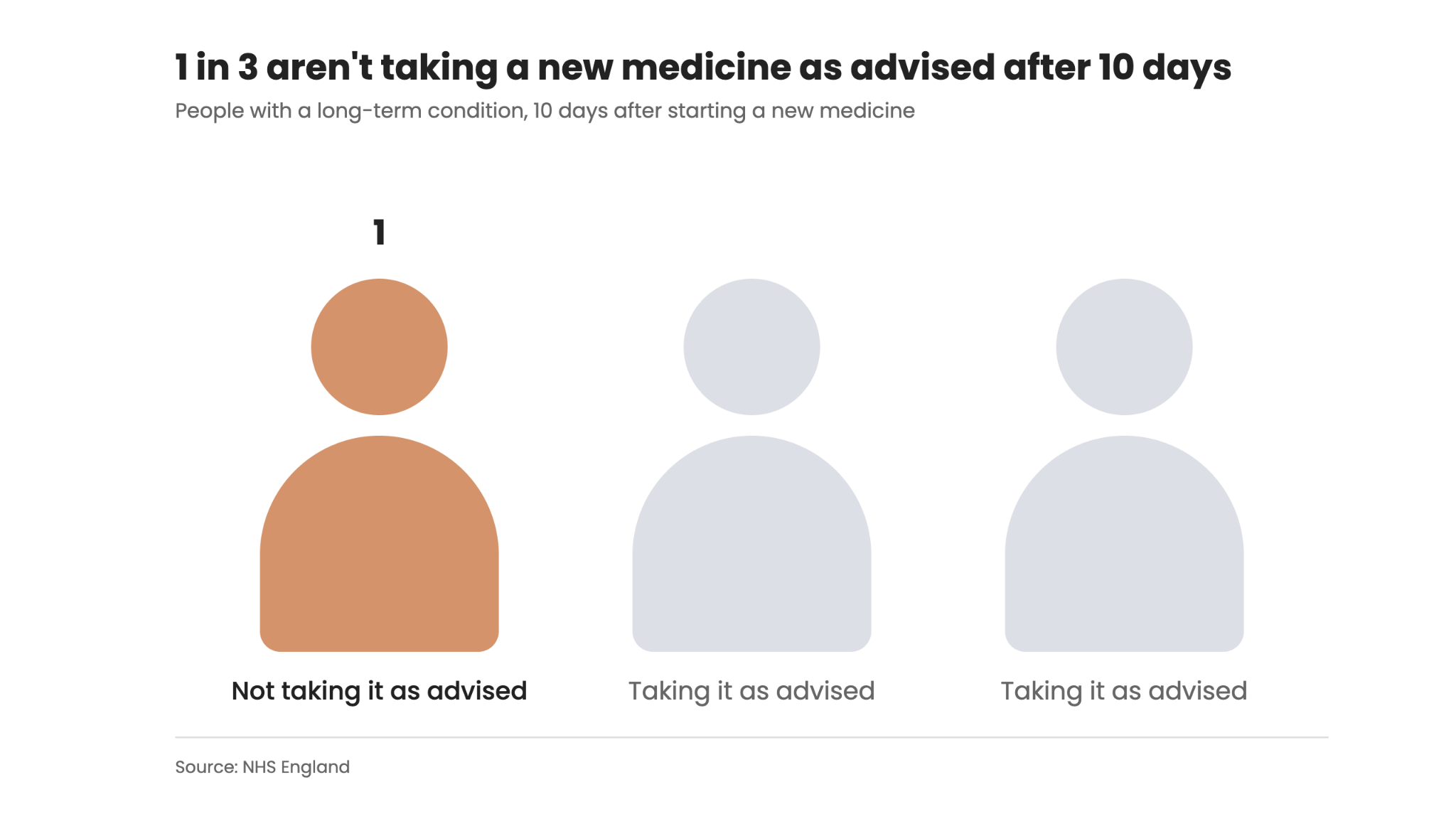
These challenges often begin soon after a new medicine is started. Around one in three people with a long-term condition are not taking a new medicine as advised 10 days after starting it (NHS England). In primary care, this can contribute to conditions that are harder to manage, appointments and hospital admissions that might otherwise have been avoided, and useful medicines going to waste.
Why It's Harder Than It Sounds
Taking medicines regularly requires ongoing effort. Researchers usually split the reasons into two camps:
- Unintentional: Simply forgetting, having your routine thrown off by travel, work, or illness, or being unsure about instructions.
- Intentional: Making a conscious choice to pause or stop. This usually happens because of unpleasant side effects, worry about dependence, or feeling perfectly well (especially common with "silent" conditions like high blood pressure).
Solving this means tackling both sides. That is building easy routines for the times we forget, as well as creating open, safe ways to talk through doubts or side effects.
Where Habits Come In
Taking medication every day for years is a behaviour like any other, and the behaviours we keep up most reliably are the ones we no longer have to think about.
Research backs this up: in a study of people with type 2 diabetes, how automatic medicine-taking had become was a better guide to whether people took their medicines than their beliefs about them (Phillips et al., 2016).
In practice, the most reliable approach is to tie medicines to something that already happens every day, so the routine does the remembering. For example:
- Anchor it to an existing routine: take tablets while the kettle boils, keep them next to the toothbrush, or take them after feeding a pet.
- Keep it in sight: medicines tucked away in a cupboard are easy to forget, so keep them next to the phone charger or the tea bags.
- Make it easy to check: a weekly pill organiser, or writing the days of the week on a blister pack, takes the guesswork out of "did I take it already?"
- Plan for disruption: weekends, holidays and busy days are when routines slip, so a spare dose in a bag or a small pill container on a keyring can help.
How Holly Health Supports Medication Routines
Holly Health builds on this approach. The whole service is grounded in behavioural science, with 46 recognised behaviour change techniques woven throughout. Rather than simply logging doses, it focuses on turning medicine-taking into a natural part of daily life, and includes features designed specifically to support medication routines.
A supportive conversation. If a user mentions they are finding their medication tricky, the app offers a short, friendly conversation. It shares practical tips and gently encourages them to speak with their GP or pharmacist if worries or side effects are getting in the way.
Building daily habits. Users can add "Take your medication" as a daily habit, alongside their habits for movement, sleep, nutrition and mental wellbeing. Gentle prompts help while the routine is forming.
Noticing what makes a difference. Users can also log their medication alongside how they’re feeling day to day, such as energy, mood or sleep. Over time, this can help them notice patterns and bring useful insights to conversations with their GP or pharmacist.
What We've Seen So Far
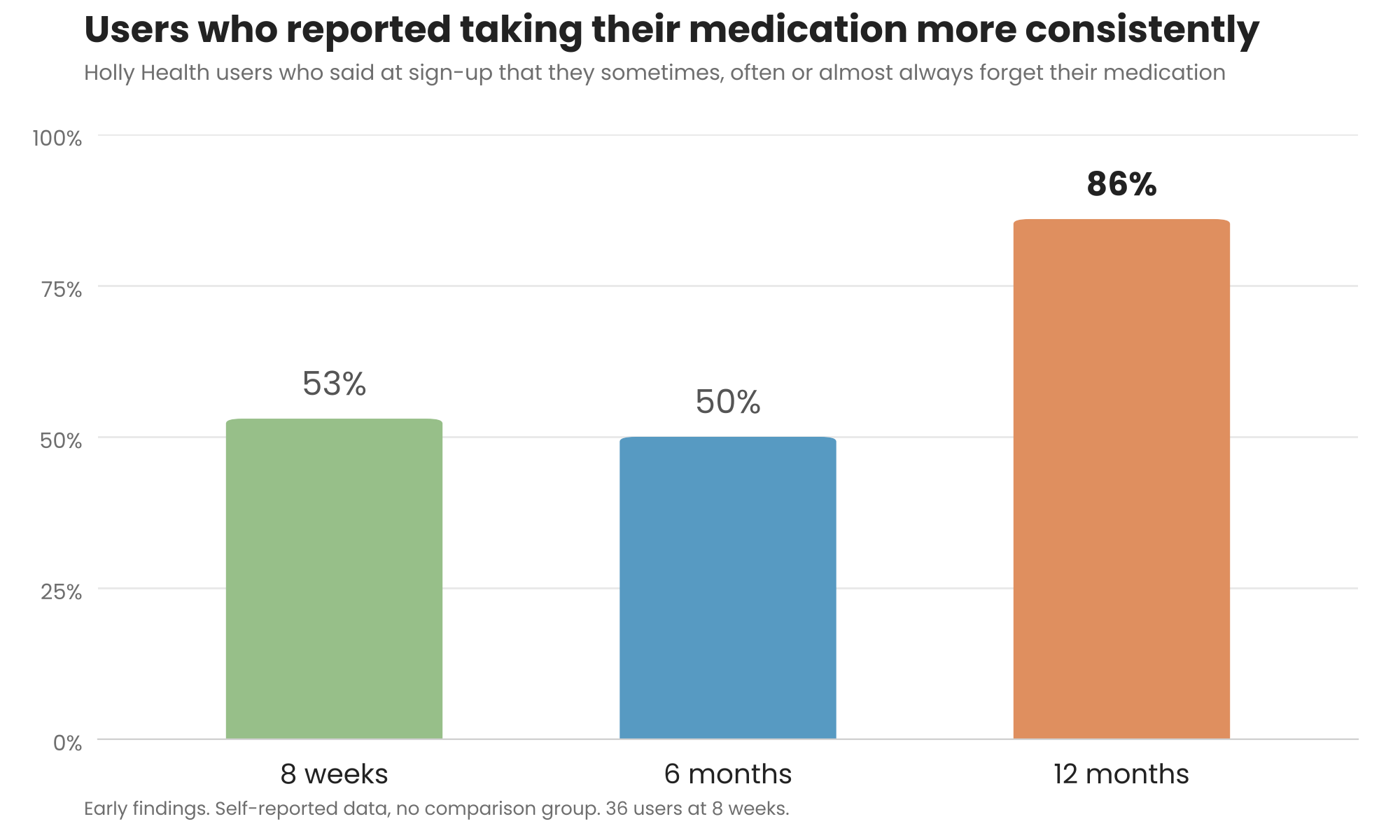
We looked at Holly Health users who, when they joined, said they sometimes, often or almost always forget to take their medication as prescribed. We asked them again at 8 weeks, 6 months and 12 months.
- 8 weeks: average adherence up 19%, with 53% of users improving
*These are early findings from small groups (36 users), based on self-reported data and without a comparison group. We'll share fuller results as more data comes in.
Why This Matters for Healthcare Teams
GPs, practice pharmacists, and nurses already do vital work helping patients understand their medicines during appointments. The tricky part is what happens in the weeks and months between visits.
Holly Health helps bridge that gap by turning good intentions from a consultation into quiet, everyday habits at home. And because medication sits alongside sleep, movement, and stress support in the same place, patients get practical support for the whole picture, without needing a separate app for every condition.


