
Living with the Invisible: Impact of Digital Health Coaching on Chronic Pain Outcomes
Chronic pain is often unseen to others, yet it remains a complex and widespread public health issue. It can significantly affect sleep, mental wellbeing, energy levels, and personal autonomy. According to the British Pain Society, approximately 43% of adults in the United Kingdom (just under 28 million people) are currently living with some degree of chronic pain. Prevalence is higher in older age groups, with up to 62% of those aged 75 and over reporting pain symptoms.
The burden of chronic pain is substantial. Around 41% of individuals attending pain clinics report that their pain has prevented them from working. In addition, the prevalence of chronic pain is projected to increase by approximately 32% by 2040, largely driven by an ageing population living with multiple long-term conditions (British Pain Society, 2024). National Institute for Health and Care Excellence (NICE) guidelines emphasise the importance of holistic, multidisciplinary approaches to assessment and management, particularly highlighting the role of self-management strategies (NICE, 2021).
This report analyses data from 2,554 users of Holly Health who self-identified as managing chronic pain at onboarding. It explores how personalised digital health coaching, focused on routine building and habit formation, may be associated with reported health and wellbeing outcomes. Responses were scored using a 'traffic light' system to guide personalised coaching and content delivery based on users’ reported needs.
Users were invited to complete a behavioural health check at onboarding and again after eight weeks of using the service. This assessment measured physical activity, nutrition, sleep and energy, mental wellbeing, and self-management. This analysis compares baseline scores with follow-up data from 250 users who completed the eight-week evaluation.
Understanding the Chronic Pain Cohort
We began our analysis by looking at 2,554 individuals who joined Holly Health seeking a different way to manage their health. The chronic pain cohort was predominantly female (83.4%), compared with 73.8% in the wider UK Holly Health user base. The majority of users were aged between 45 and 64 years.
At onboarding, 35.0% of users selected ‘Manage weight’ as their primary goal. Other common goals included ‘General health’ (17.3%) and ‘Feel better’ (14.7%). While weight management was a frequent motivation, users also demonstrated a strong interest in improving overall wellbeing and physical health.
More Than Just Pain: Navigating Complex Health Needs
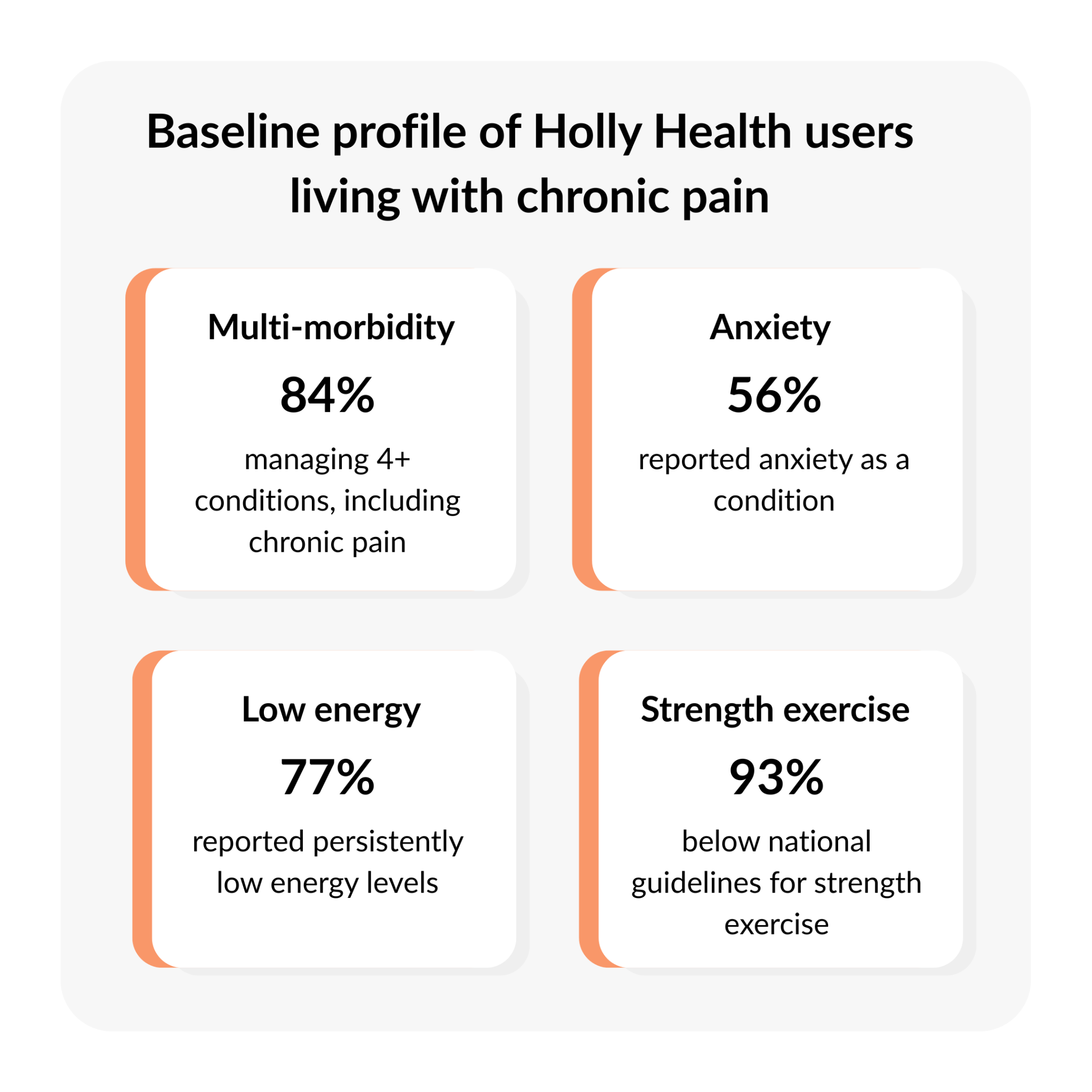
Chronic pain is rarely presented in isolation. For the vast majority of our users, chronic pain is just one piece of a much larger, more complex health puzzle. A total of 83.5% of users in this cohort reported managing four or more health conditions, highlighting a high level of multi-morbidity.
The most frequently reported co-morbid conditions alongside chronic pain were anxiety (56%) and depression (52.98%). The co-occurrence of anxiety and depression alongside chronic pain suggests that many users are managing overlapping physical and mental health challenges that likely influence daily functioning and wellbeing.
Finding the Path: Eight Weeks of Positive Change
Eight weeks can pass quickly, but when we focus on small, intentional habits, it is enough time to start rewriting the narrative of daily health. After eight weeks of using the Holly Health service, users who completed follow-up surveys reported improvements across multiple behavioural and wellbeing measures.
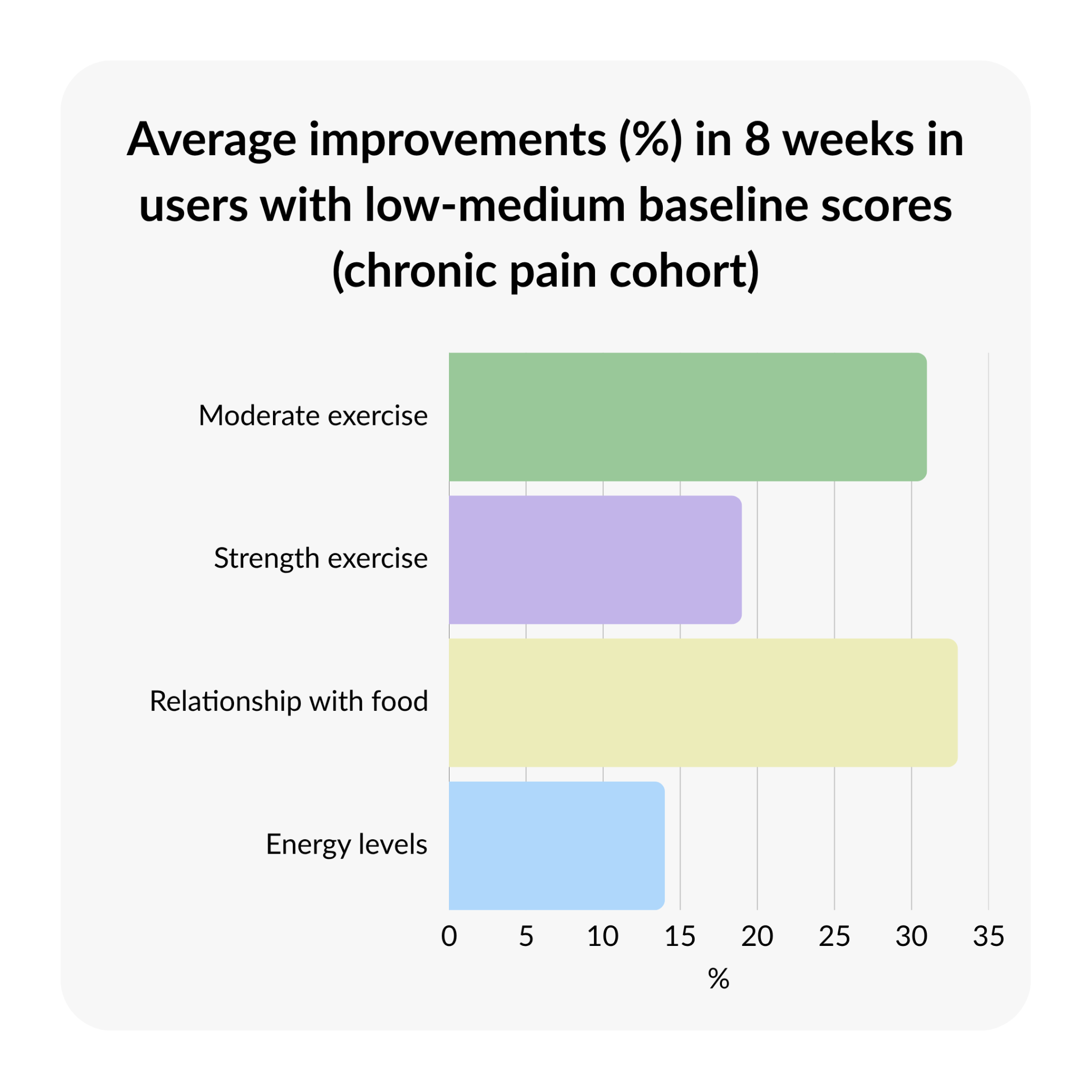
This isn't about radical lifestyle overhauls; it's about the compounding effect of tiny, achievable wins. Users saw meaningful improvements across the board, particularly in physical activity and nutrition:
- Moderate Exercise Hours: 31% increase
- Strength Exercise Hours: 19% increase
- Relationship with Food: 33% improvement
- Energy Levels: 14% increase
As one user noted, these changes create a ripple effect:
“Sleeping better has meant my joint problems seem less painful, so less pain relief has been needed. Also, brain fog has been better some days.”
Regaining Control: A Boost in Self-Reported Wellbeing
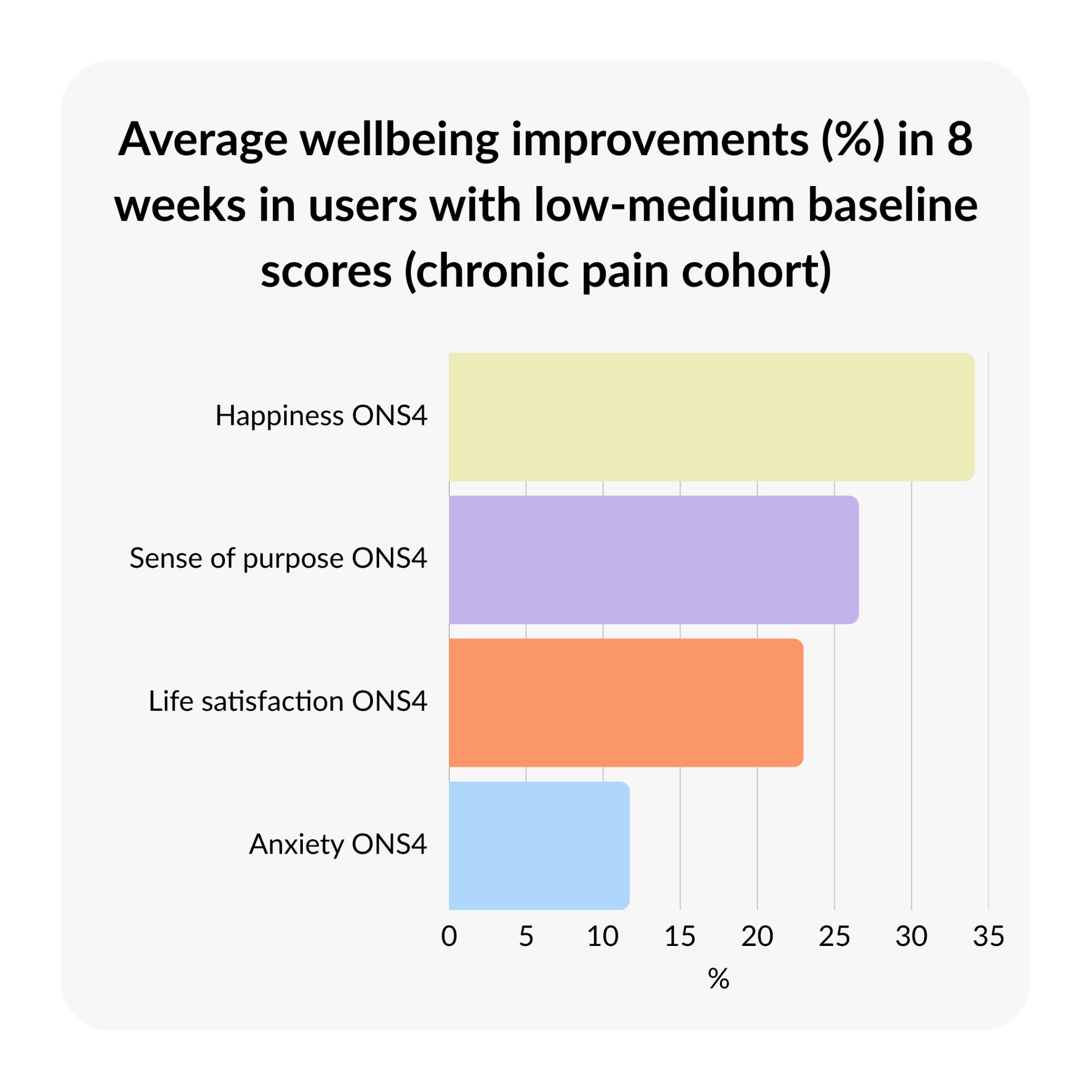
The data suggests that as users built these new habits, they regained a crucial sense of control over aspects of their lives. We measured wellbeing using the ONS4 framework, and the results were encouraging:
- Happiness: 34% increase
- Sense of Purpose: 27% increase
- Life Satisfaction: 23% increase
- Anxiety: 13% reduction
A New Relationship with Care
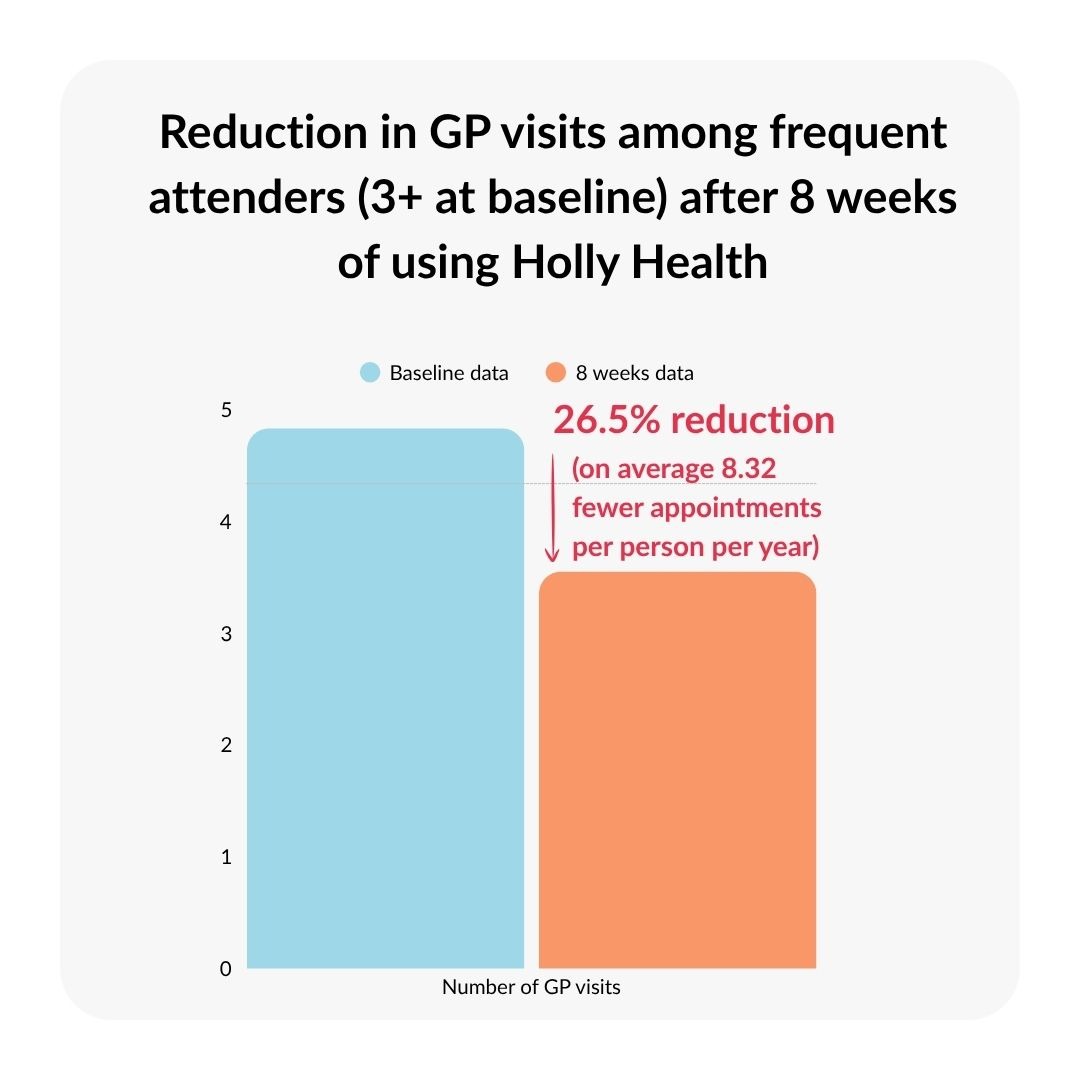
Perhaps the most telling sign of progress wasn't only how users felt, but how their dependence on external clinical support appeared to shift, as Holly Health may be linked to changes in reported primary care usage. Among users reporting three or more GP appointments in the eight weeks prior to joining Holly Health, GP visits decreased by 26.5% in the subsequent eight-week period - possibly reflecting increased confidence in day-to-day symptom management.
Small Wins, Big Impact
The ‘small habits' approach is central to the Holly Health service. For a cohort managing multiple conditions alongside chronic pain, forming even one automatic new habit within eight weeks is a meaningful achievement. By the end of the 8 weeks, 58% of users had done exactly that and made at least one new health behaviour a natural part of their daily routine.
As one user reflected:
"I’ve found it very helpful and it hasn’t put me under pressure to do more than I can with my chronic illness."
Looking Ahead: Sustainable Support for a Complex Condition
Chronic pain is rarely simple. Often, it sits alongside fatigue, anxiety, and a cluster of other conditions that can make everyday life difficult to navigate. Our findings suggest that meaningful progress doesn't always require a complete overhaul. Small, sustainable habits, built gradually, can shift how people feel and function day to day.
Users with chronic pain reported improvements across physical activity, nutrition, and mental wellbeing, alongside a reduction in GP visits among those who had been attending most frequently. This points to Holly Health's potential to bridge the gap between clinical care and everyday self-management - not replacing one, but quietly supporting the other.
For people managing multiple conditions, the goal isn't always to do more. It's to make the small things feel possible, and then automatic. That shift, from effort to habit, is where real change takes hold. As we continue to support people living with chronic pain, it's this principle, small, steady, sustainable, that will guide the way.


